The Custom Process
A Custom fitting involves a four-step process to ensure that your garment fits perfectly and matches your preferences. Here's a breakdown of each step:

1.
Select Fabric
What It Involves: Choose the type of fabric you want for your garment. Fabrics come in various types, weights, and textures, such as wool Supers up to 150s, Irish, etc. linen, silk, or synthetic blends.
Considerations: Think about the garment’s purpose (e.g., formal vs. casual), the season (e.g., lightweight for summer, heavy for winter), and personal preferences for comfort and appearance.
2.
Select Style
What It Involves: Decide on the overall design and cut of the garment. This includes choosing elements like the type of collar, sleeve length, fit (slim, regular, etc.), and other stylistic features.
Considerations: Reflect on current fashion trends, your personal style, and the intended use of the garment. This step ensures that the garment aligns with your aesthetic preferences and functional needs.
3.
Choose Customizations
What It Involves: Choose the type of fabric you want for your garment. Fabrics come in various types, weights, and textures, such as wool Supers up to 150s, Irish, etc. linen, silk, or synthetic blends.
Considerations: Think about the garment’s purpose (e.g., formal vs. casual), the season (e.g., lightweight for summer, heavy for winter), and personal preferences for comfort and appearance.
4.
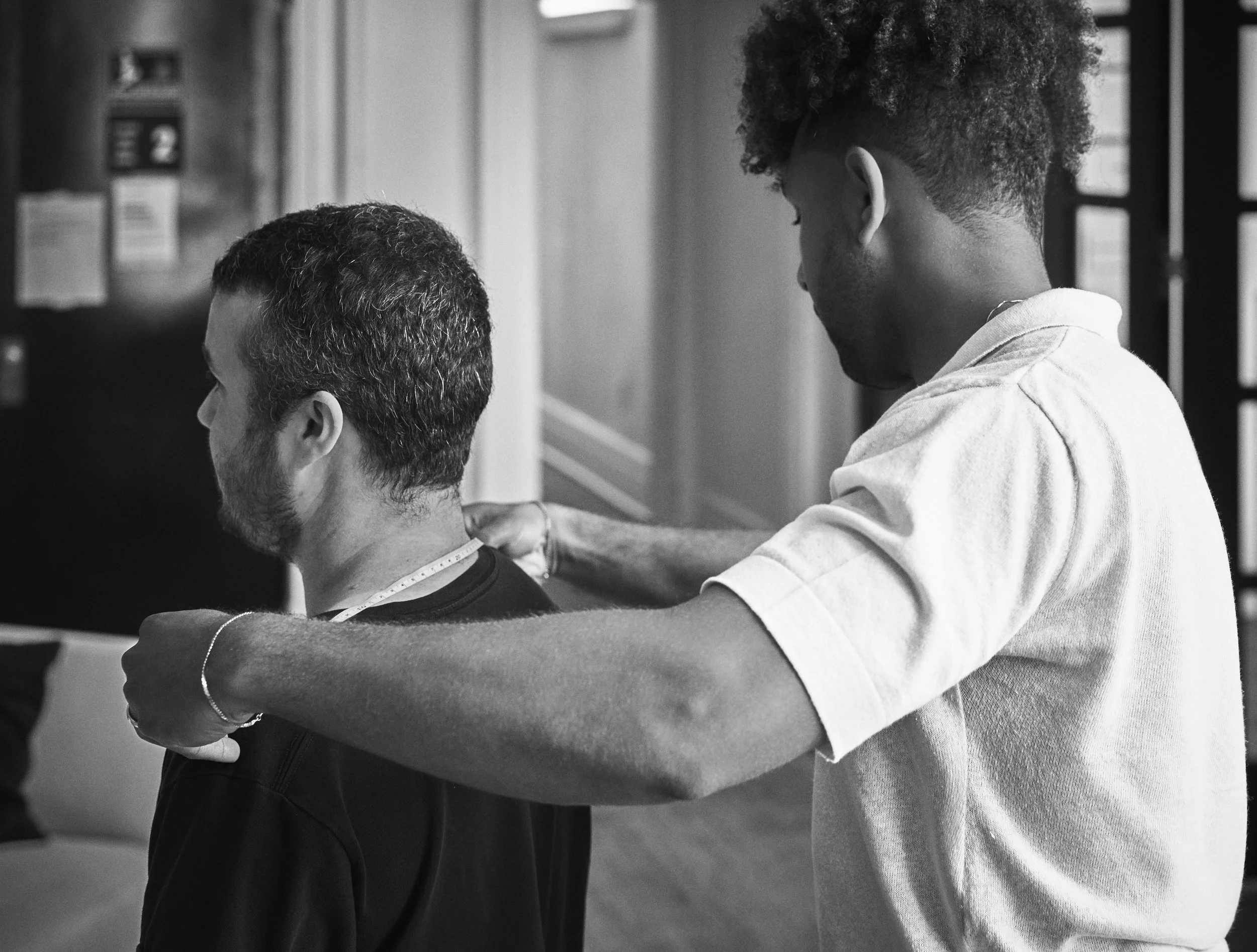
Measure
What It Involves: Take precise measurements of your body to ensure the garment fits perfectly. This typically includes measurements like chest, waist, hip, inseam, and sleeve length.
Considerations: Accurate measurements are crucial for a well-fitting garment. We make all necessary adjustments in house (since we actually sew)